
Rinnai vs Navien Tankless: An IE Specialist's Honest Comparison
Rinnai vs Navien from a tankless-only specialist: warranty, recirculation, IE service availability, condensing efficiency, real cost differences.
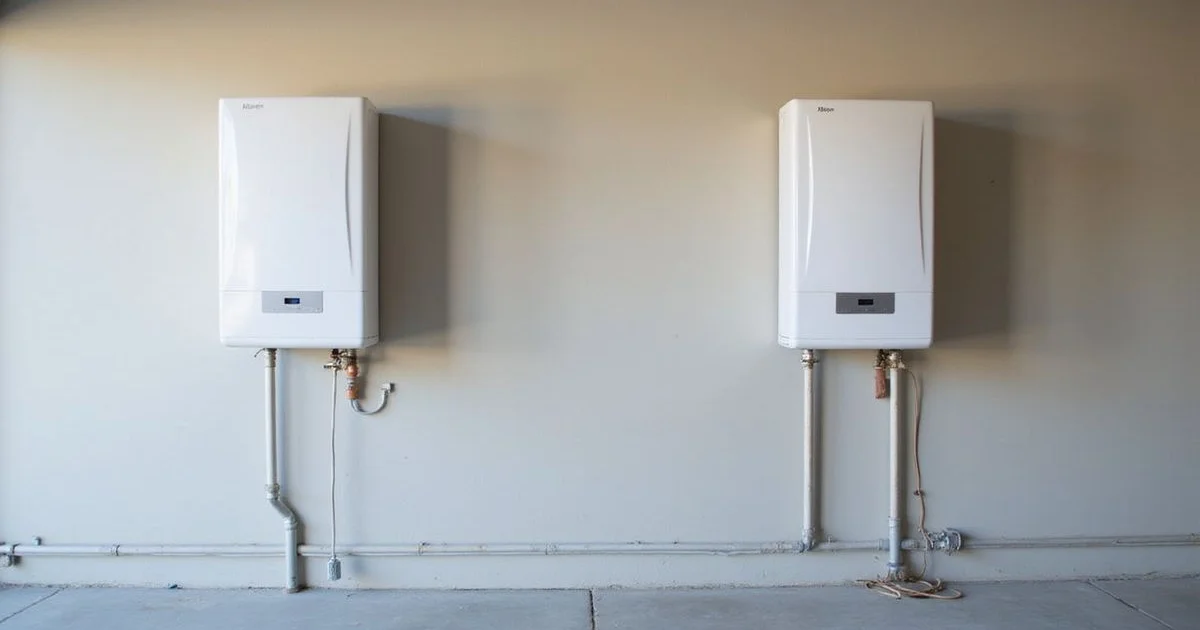
The short take, from someone who installs both daily
Both Rinnai and Navien are excellent. We install both every week across the Inland Empire, and either will serve a typical IE home for 15–20 years with proper maintenance. The real differences are narrower than the marketing suggests:
- Rinnai edges ahead on simplicity, weight, and ease of service.
- Navien edges ahead on built-in recirculation features and (usually) better dollars-per-UEF.
For most IE homeowners, we’ll pick based on your specific home — recirculation needs, gas service, and venting path — not brand loyalty. If you want the broader install picture before picking a brand, see our tankless installation service for what each install covers. Still weighing whether to switch in the first place? Our tankless vs tank water heater comparison helps you decide before drilling into brand.
Side-by-side comparison
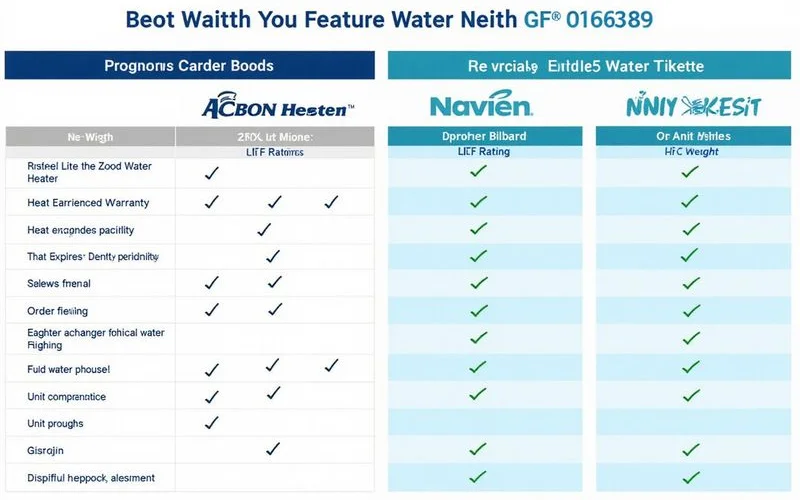
| Factor | Rinnai (Sensei) | Navien (NPE-A2) |
|---|---|---|
| Heat exchanger warranty | 15 years | 15 years |
| Labor warranty | 5 years | 5 years |
| Recirculation | Circ-Logic (crossover valve compatible) | NaviCirc (dedicated internal pump) |
| UEF (flagship condensing) | 0.96 | 0.97 |
| Typical installed weight | Lighter (~50 lbs) | Heavier (~80 lbs) |
| Service network in IE | Strong | Strong |
| Typical installed delta | Baseline | +$200–$400 |
Where Rinnai wins
Rinnai’s strengths are practical, not flashy:
- Lighter unit weight. A 50-pound unit is easier to mount on an exterior wall and easier to service later. Field plumbers like working on them.
- Simpler service architecture. Fewer integrated components means fewer points of failure and easier diagnosis when something does go wrong.
- Cleaner error code language. Rinnai’s error codes (11, 12, 25) map to specific failures with less ambiguity. Diagnosis is fast.
- Slightly better service network. Rinnai’s authorized service dealer program is a bit more mature in Southern California, which means parts availability is marginally faster for less-common components.
Where Navien wins
Navien’s strengths are about integrated features and efficiency math:
- NaviCirc recirculation. The internal pump on the NPE-A2 series is integrated cleanly. For homes with a dedicated return loop, it’s a tighter solution than retrofitting a Circ-Logic kit.
- Slightly higher UEF. 0.97 vs 0.96 doesn’t sound like much, but at IE gas rates over 15 years, it adds up to a few hundred dollars.
- Better dollars-per-UEF on mid-tier units. For homeowners who want a mid-range condensing unit without going to Rinnai’s flagship Sensei, Navien’s NPE-S2 is often the sweet spot.
- Newer firmware platform. Smart-home integration and remote diagnostics are slightly more developed on Navien’s app.
Recirculation: NaviCirc vs Circ-Logic
This is where the brand decision gets concrete. Recirculation eliminates the “wait for hot water” delay that’s tankless’s biggest lifestyle complaint.
- NaviCirc is a built-in pump on Navien NPE-A2 units. It works best with a dedicated hot-water return loop (a second pipe running back to the unit). Energy-efficient when paired with smart scheduling.
- Rinnai Circ-Logic is firmware logic that drives an external pump and crossover valve. The crossover valve approach works without a return loop, using the cold-water line as the return path. Slightly less efficient, but works in homes that weren’t plumbed for recirculation.
If your home has a dedicated return line: Navien NPE-A2 with NaviCirc is the cleanest solution. If your home doesn’t (most don’t): Rinnai Sensei with Circ-Logic and a crossover valve is the practical choice.
For the full recirculation deep-dive, see our recirculation pump guide.
Cost difference in the IE
Installed in a typical Inland Empire home, the brand difference shows up as roughly $200–$400 on the total install:
- Rinnai Sensei RSC (199K BTU condensing): $5,500–$7,500 typical install range.
- Navien NPE-A2 (199K BTU condensing): $5,800–$7,900 typical install range.
That’s a small enough gap that the recirculation feature usually drives the call.
A specialist’s recommendation beats brand loyalty
Here’s the candid version: if you ask a plumber who only installs Rinnai whether you should pick Rinnai, you know the answer before you ask. Same with a Navien-only shop. Empire Tankless installs both because we’ve watched both perform across the Inland Empire’s hard water and high-demand homes.
For your specific home — your gas service, your floor plan, your hot-water habits — the right answer comes out of a 15-minute conversation, not a brand allegiance. Send photos for a free virtual estimate, mention you want a brand recommendation, and we’ll tell you what we’d put in our own house.
Frequently Asked Questions
Which brand has the better warranty?
Is NaviCirc better than Rinnai Circ-Logic?
Which is easier to service in the Inland Empire?
Related Guides
Are Tankless Water Heaters Worth It? An Honest Take
Is a $5K–$9K tankless upgrade really worth it? Direct answer up top, then payback math, lifestyle benefits, and when a tank is still the better call.
Hard Water and Tankless Water Heaters in the Inland Empire
Inland Empire water is notoriously hard, and hard water is the #1 cause of premature tankless failure. Here's how scaling works, descaling cadence, and when a softener pays off.
Tankless vs Tank Water Heater: Which Is Right for Your Inland Empire Home?
Side-by-side tankless vs tank for Inland Empire homes — upfront cost, lifespan, efficiency, hot-water continuity. Honest take on when staying with a tank makes sense.
What Is a Tankless Water Heater and How Does It Work?
Tankless water heaters heat water on demand instead of storing it. Here's the plain-English mechanics, GPM and BTU basics, and where the unit lives in your home.