
Tankless vs Tank Water Heater for Inland Empire Homes
Side-by-side tankless vs tank for Inland Empire homes — upfront cost, lifespan, efficiency, hot-water continuity. Honest take on when staying with a tank makes sense.
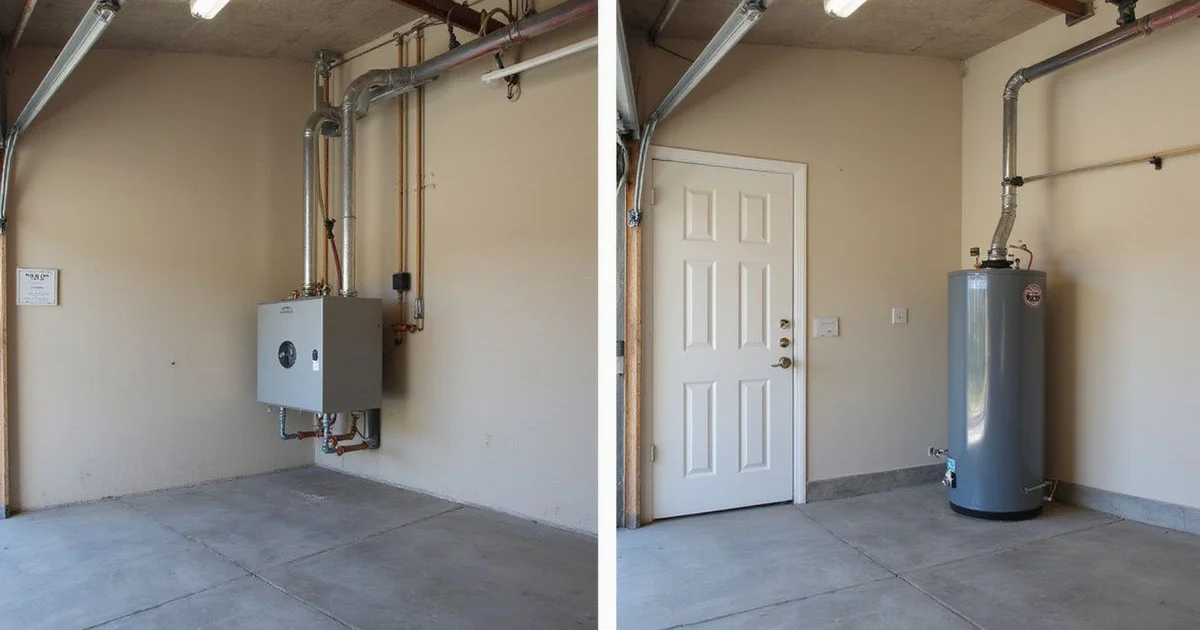
You know how the upfront sticker shock of a major plumbing upgrade often blinds property owners to the long-term utility savings. Our team deals with this hesitation constantly when discussing water heating options. This single equipment choice dictates a home’s energy footprint for the next two decades.
Let’s look at the 2026 data, analyze what it actually means for your daily usage, and explore a few practical ways to respond.
The short answer
When evaluating a tankless vs tank water heater, the tankless system is the superior choice for most Inland Empire homeowners staying in their property for at least five years. Our 2026 regional data shows a demand-type unit offers continuous hot water, cuts standby heat loss entirely, and doubles the equipment lifespan.
The primary obstacle is the initial investment. Our technicians typically see install rates ranging from $4,000 to $8,000 for a full tank-to-tankless conversion in Riverside and San Bernardino counties. A standard like-for-like tank replacement usually runs between $1,900 and $2,500.
We suggest reading our detailed breakdown on are tankless water heaters worth it? if you are still weighing the financial pros and cons. This resource provides an honest look at the daily practicalities. Our tank-to-tankless conversion service page outlines exact pricing tiers for Southern California if you are ready to make the switch today.
Side-by-side comparison
Comparing these systems side-by-side reveals that tankless units require a larger upfront budget but deliver long-term savings and infinite hot water. We use this data-driven table to show the stark contrast in daily operational costs and expected lifespans.
The table below outlines the basic differences to help you make a clear choice.
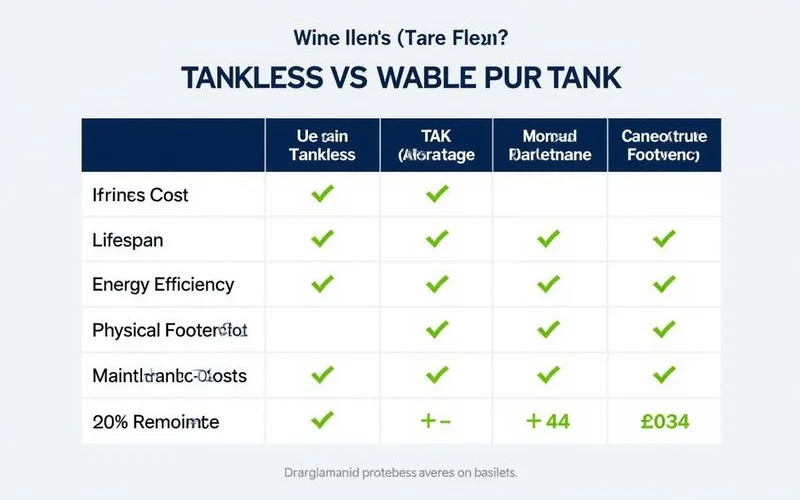
| Feature | Tankless System | Traditional Tank |
|---|---|---|
| Upfront Cost (Installed) | $4,000 to $8,000 | $1,900 to $2,500 |
| Typical Lifespan | 15 to 20 years | 8 to 12 years |
| Annual Operating Cost | $200 to $300 | $400 to $600 |
| Standby Heat Loss | 0% (Heats on demand) | 10% to 20% of energy used |
| Hot Water Capacity | Continuous (Limited by GPM) | 40 to 80 gallons, then recovery |
| Space Required | Wall-mounted (Saves 4 to 6 sq. ft.) | Floor-standing |
| Maintenance Need | Annual descaling required | Annual flushing recommended |
The tradeoff is perfectly clear for most properties. Our customers find that the extra upfront money buys them more garage space and lower gas bills over time. How much those lower bills matter depends entirely on your household size and how long you plan to own the house.
We always ask clients to calculate their daily hot water frustrations before making a final choice.
When tankless wins
A tankless water heater is the better investment if you frequently run out of hot water, plan to stay in your home long-term, or want to reclaim garage space. We strongly recommend upgrading under these specific conditions.
If you are asking yourself, “Should I switch to tankless?” several key factors make this modern system a clear winner for local residents.
- You run out of hot water regularly. Back-to-back showers and simultaneous laundry loads drain standard tanks quickly. A properly sized tankless unit provides continuous hot water without interruption.
- You plan to stay 5 or more years. The energy savings and extended lifespan will compound significantly over time. The U.S. Department of Energy reports that homes using 41 gallons or less of hot water daily can be 24% to 34% more energy efficient with a demand-type setup.
- Your current tank is leaking or failing now. Replacing a broken 12-year-old tank is the ideal opportunity to upgrade. You are already paying for the necessary labor, permits, and disposal fees.
- You want to reclaim floor space. Wall-mounted systems free up 4 to 6 square feet in your garage or utility closet. This provides valuable storage room in smaller Inland Empire homes.
- You qualify for local gas rebates. The 2026 SoCalGas rebate program offers up to $1,300 for high-efficiency ENERGY STAR condensing units. This massive incentive drastically lowers the effective installation price.
Our installation crews see these specific scenarios play out daily across the region. Upgrading simply makes sense when the long-term benefits outweigh the initial costs.
When staying with a tank still makes sense
A standard tank replacement is the smarter financial decision if you plan to move soon, live in an all-electric home, or use very little hot water. We regularly advise clients to stick with a traditional tank when the numbers do not justify a massive upgrade.
Tankless vs traditional water heater comparisons show that demand systems are not the perfect solution for every single property.
- You are selling within 2 to 3 years. The upfront premium will not fully recoup in resale value. A new tank is the most cost-effective move to pass a buyer’s inspection.
- You have no gas service. Electric tankless heaters require heavy electrical panel upgrades that quickly erase any potential energy savings. A standard electric tank or a heat pump water heater is usually a better option here.
- Your daily usage is exceptionally low. A small household with one bathroom does not generate enough hot-water demand to pay back the upfront equipment cost through energy savings alone.
- Your installation requires major structural changes. Extensive gas-line rework, difficult attic access, or a cramped crawlspace can push conversion costs past $10,000. A high-quality tank looks very reasonable at that price point.
Our goal is to provide the most practical recommendation, even if that means installing a basic tank. Pushing a massive system on a low-demand household goes against good business practices.
Inland Empire specifics
The Inland Empire presents unique challenges like extremely hard water, but it also offers excellent local rebates that change the financial math. We must account for these regional variables because they differ wildly from national averages.
Two specific factors completely alter the typical lifespan and cost expectations in this area.
Brutal Hard Water Conditions
Inland Empire water is notoriously harsh on plumbing fixtures. Our local testing shows water hardness levels hitting 18.5 grains per gallon (GPG) in San Bernardino and 12.8 GPG in Riverside during 2026.
This extremely high mineral content means heat exchangers scale up much faster than the national average. We warn every customer that skipping annual maintenance will lead to premature equipment failure.
The good news is that proper yearly descaling allows these systems to easily outlast traditional tanks, even in hard-water zones. Our Inland Empire hard water guide covers the exact descaling cadence and water softener recommendations you need.
High-Value SoCalGas Rebates
Local utility incentives significantly lower the barrier to entry for high-efficiency upgrades. We actively help our clients apply for the 2026 SoCalGas rebates, which provide up to $1,300 for qualifying ENERGY STAR condensing units.
This program brings the effective conversion price down closer to the $4,000 range. Our office staff tracks these incentive programs closely to ensure you get the maximum possible return.
The final out-of-pocket expense often looks much closer to a premium tank replacement than the initial sticker price suggests.
The honest payback math
A realistic payback period for an Inland Empire home ranges from 7 to 10 years based on energy savings and local rebates. We often see online calculators promising a magical 5-year return, but that is overly optimistic for most households.
The true financial return accelerates when you factor in the extended lifespan of the equipment and the immediate gas company incentives. We confidently recommend the tankless route if you plan to stay in your property for a decade or more.
The math becomes much tighter if you intend to move within three years. Our advice in those short-term situations is to weigh the personal lifestyle benefit of infinite hot water against the pure financial return.
A free virtual estimate is the absolute best way to put real, actionable numbers on your specific property.
We will quote both the advanced conversion and an honest, straightforward tank replacement, settling the tankless vs tank water heater debate for your specific needs. Getting precise figures ensures you make the smartest choice for your home and your wallet.
Call our office today or fill out our online form to schedule your consultation.
Frequently Asked Questions
Is tankless really worth the higher upfront cost?
How much space does tankless save?
Is tankless better for hard water?
Related Guides
Are Tankless Water Heaters Worth It? An Honest Take
Is a $5K–$9K tankless upgrade really worth it? Direct answer up top, then payback math, lifestyle benefits, and when a tank is still the better call.
Hard Water and Tankless Water Heaters in the Inland Empire
Inland Empire water is notoriously hard, and hard water is the #1 cause of premature tankless failure. Here's how scaling works, descaling cadence, and when a softener pays off.
Rinnai vs Navien Tankless: Which Is Better for Inland Empire Homes?
Rinnai vs Navien from a tankless-only specialist: warranty, recirculation, IE service availability, condensing efficiency, real cost differences.
What Is a Tankless Water Heater and How Does It Work?
Tankless water heaters heat water on demand instead of storing it. Here's the plain-English mechanics, GPM and BTU basics, and where the unit lives in your home.