
Hard Water and Tankless Water Heaters in the Inland Empire
Inland Empire water is notoriously hard, and hard water is the #1 cause of premature tankless failure. Here's how scaling works, descaling cadence, and when a softener pays off.
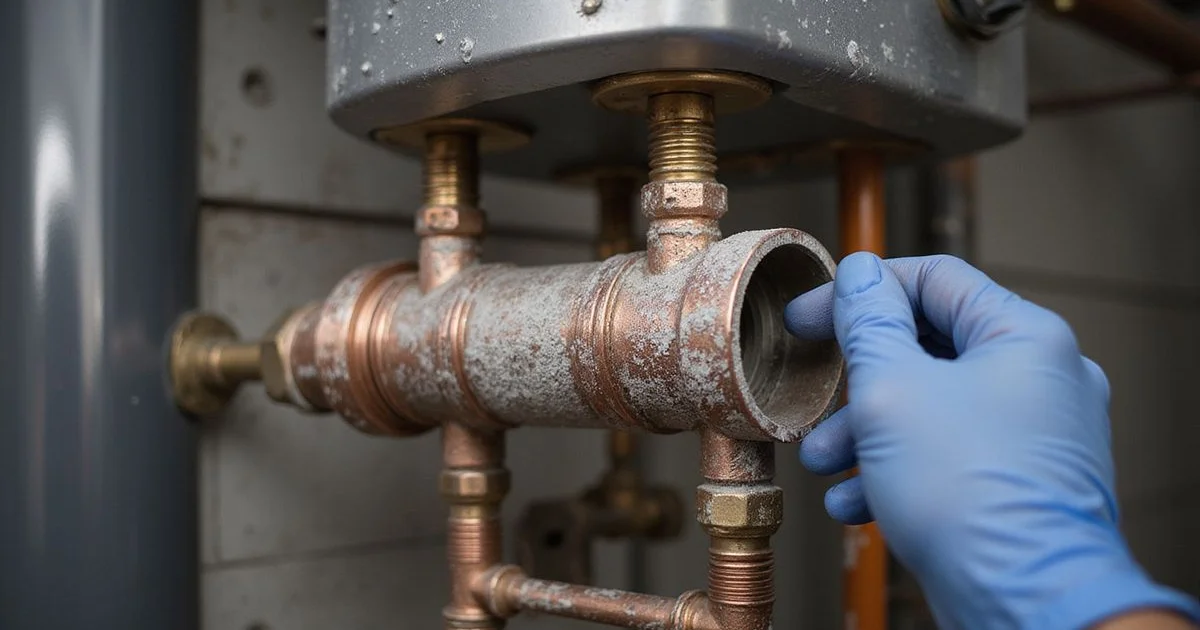
Our team gets dozens of calls a week about sudden drops in hot water pressure. A hard water tankless water heater inland empire combination is almost always the culprit. We witness daily how rapidly mineral buildup can shut down an otherwise perfectly functioning system.
The good news is that you can stop this damage before it starts.
Let’s look at the data, what it actually means for your plumbing, and exactly how you can protect your equipment.
Why Inland Empire water is hard on tankless units
Inland Empire water contains heavy concentrations of calcium and magnesium that bake directly onto the internal components of your heater. This thick mineral layer acts as an insulator, forcing the burners to work significantly harder just to reach your set temperature.
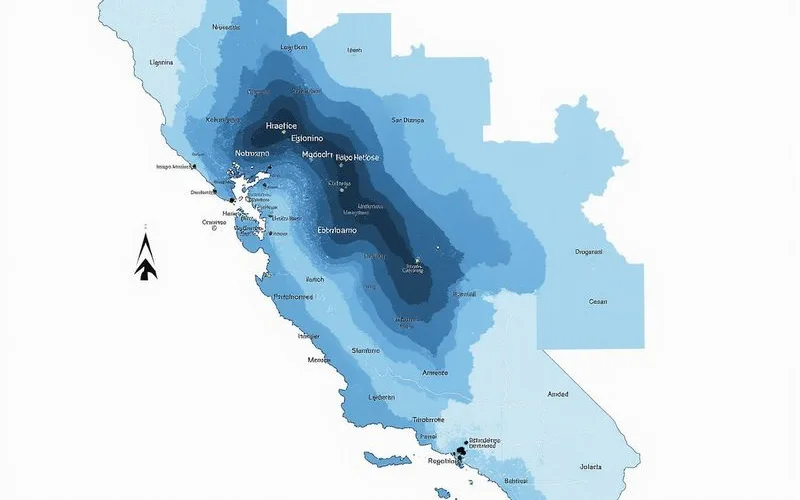
The water here runs extremely hard. Most of Riverside and San Bernardino counties measure between 10 and 20 grains per gallon. Local districts like EMWD and Western MWD rely heavily on groundwater sources.
Anything past 7 grains per gallon qualifies as hard by Water Quality Association standards. The local water is roughly double that threshold.
| Water District | Average Hardness | Severity |
|---|---|---|
| EMWD | 14 to 18 GPG | Extreme |
| Western MWD | 12 to 16 GPG | Very Hard |
| WQA Standard | 7 GPG | Hard |
We handle these difficult breakdowns every single day. A routine flush makes a massive difference for local homes. Check out our annual tankless maintenance service to see the exact descaling process and our recommended schedules.
A 2024 Water Quality Association study showed that unmanaged hard water can slash water heater efficiency by up to 24 percent. This means your gas bill creeps up while your water pressure drops. Our technicians consistently identify this extreme local scaling as the number one reason these systems fail early in Southern California.
How scaling actually damages the unit
Scaling ruins your unit by creating a rock-like barrier that blocks heat transfer and physically chokes off water flow. The longer this buildup bakes onto the metal fins, the faster the internal components warp and crack.
We track these specific failure patterns across hundreds of local service calls. The hard water tankless damage follows a very predictable timeline when systems are left untreated.
- First 6 to 12 months: Light scale coats the exchanger fins. Your daily performance is still strong, but the internal burner runs slightly hotter to compensate.
- Year 1 to 2 (no maintenance): The calcium layer thickens considerably. A system that pushed 8 gallons per minute at installation now drops to 6.5. Your winter showers feel noticeably weaker because the incoming groundwater is much colder.
- Year 2 to 3 (no maintenance): The system runs at maximum capacity just to maintain basic temperatures. Safety sensors trigger frequent error codes, like a Navien Error 16 for over-temperature or a Rinnai Code 11 for ignition issues. The thermal cutoff completely shuts off the hot water during heavy use.
- Year 3+ (no maintenance): The heat exchanger metal permanently degrades. A heavy chemical flush might recover partial function, but the structural damage remains. A full replacement becomes unavoidable years before it should.
This predictable failure curve ruins hundreds of local appliances every year. A routine annual descaling completely rewrites this timeline.
Warranty implications
Manufacturers mandate documented annual service to keep their long-term heat exchanger warranties active. Skipping this crucial maintenance gives the brand immediate grounds to deny your claim for any scale-related failure.
We regularly help homeowners manage complex claims, and the fine print is unforgiving. Major brands explicitly classify hard water scaling as a preventable environmental issue, not a manufacturing defect.
| Major Tankless Brand | Heat Exchanger Warranty | Service Requirement |
|---|---|---|
| Rinnai | 15 Years | Documented Annual Flush |
| Navien | 15 Years | Proof of Regular Maintenance |
| Rheem | 12 Years | Annual Descaling Service |
Our service logs prove that having a professional record saves you serious money. A denied warranty claim leaves you paying $600 to $1,200 out of pocket for a replacement exchanger. Keeping strict documentation protects that investment when the system finally hits the ten-year mark.
Descaling cadence for the IE
You must flush your system at least once a year in standard zones, or twice a year in extreme hard water areas. Waiting longer allows irreversible calcification to permanently damage the heating elements.
We test water quality across the entire region to customize these timelines. A generic national recommendation simply does not apply to our extreme tankless scaling riverside conditions.
- Standard cadence (annual): Corona, Moreno Valley, Murrieta, Ontario, Rancho Cucamonga, and most of Riverside County. These areas still see significant buildup that requires yearly attention.
- Aggressive cadence (every 6 months): Riverside city center, Temecula, Hesperia, and Victorville sit in extreme zones. Mineral content in these specific grids frequently trends past 18 grains per gallon.
- Stretched cadence (18 months): This timeline only applies if a fully functional water softener feeds directly into the tankless unit. Most local homes lack this protection. Softeners require monthly salt refills, and an ignored system provides zero defense against calcium.
When a softener pays off
Installing a whole-home water softener stops hard water damage before it ever reaches your tankless heater. This equipment pays for itself in roughly five to seven years by drastically reducing plumbing repairs.
A reliable ion-exchange water softener currently costs between $1,500 and $3,500 fully installed in this region. This investment acts as a shield for every water-using appliance in your house. The 2024 Water Quality Association findings confirm that softened water can double the effective lifespan of washing machines and dishwashers.
We highly recommend adding a dedicated softener under a few specific conditions.
- You live in an extreme hardness zone like Temecula, Victorville, or central Riverside.
- You are installing a high-efficiency condensing unit that costs $800 or more just for the hardware.
- You constantly scrub white, chalky scale off your glassware, faucets, or shower doors.
- You plan to keep the property for over a decade and want to minimize long-term maintenance costs.
We can easily provide a combined quote for both systems during a single virtual estimate. Bundling the installation saves you money by combining the labor into one visit.
Brand differences in scale tolerance
Every major tankless brand struggles with heavy scale buildup, but their specific internal materials dictate how fast the damage spreads. Certain metals resist pitting slightly longer, while others transfer heat efficiently but require gentle cleaning.
We service every make and model on the market. The engineering choices inside the cabinet directly impact how the unit handles local water conditions.
- Rinnai: These units utilize commercial-grade copper in their Sensei line. Copper handles thermal stress beautifully but is highly sensitive to harsh, acidic descaling chemicals. Your cleaning cadence is critical here.
- Navien: This manufacturer equips their residential lineup with dual stainless steel heat exchangers. High-grade 316L stainless steel tolerates aggressive water much better, though it still demands a rigorous annual flush.
- Rheem and Bradford White: These systems rely on a mix of internal materials. Their thermal performance stays highly competitive when properly maintained, but they degrade quickly if you skip service appointments.
Your brand selection matters far less than your actual maintenance discipline. A routinely serviced Rheem easily outlasts an ignored premium system every single time. For a deeper look at how copper versus stainless designs hold up in IE hard water, see our Rinnai vs Navien tankless comparison.
Bottom line for hard water tankless water heater inland empire property owners
Your equipment can easily run for nearly two decades in this region if you commit to strict preventative care. You must view professional descaling as a mandatory, recurring utility cost rather than an optional upgrade.
We see plenty of hard water tankless damage prevented by simple, consistent action. A proactive approach completely neutralizes the threat of mineral buildup. Planning for a $200 to $400 annual maintenance budget ensures your system stays efficient and under warranty.
Pro Tip: Ask to bundle your first annual flush into your initial installation estimate to automatically lock in your maintenance schedule.
We highly recommend scheduling your first flush the exact same day you install the new unit.
Call our office today to get your inspection on the books and protect your home’s hot water supply.
Frequently Asked Questions
How hard is the water in Riverside and San Bernardino counties?
Does a water softener extend tankless life?
How often do IE tankless units need descaling?
Related Guides
Are Tankless Water Heaters Worth It? An Honest Take
Is a $5K–$9K tankless upgrade really worth it? Direct answer up top, then payback math, lifestyle benefits, and when a tank is still the better call.
Rinnai vs Navien Tankless: Which Is Better for Inland Empire Homes?
Rinnai vs Navien from a tankless-only specialist: warranty, recirculation, IE service availability, condensing efficiency, real cost differences.
Tankless vs Tank Water Heater: Which Is Right for Your Inland Empire Home?
Side-by-side tankless vs tank for Inland Empire homes — upfront cost, lifespan, efficiency, hot-water continuity. Honest take on when staying with a tank makes sense.
What Is a Tankless Water Heater and How Does It Work?
Tankless water heaters heat water on demand instead of storing it. Here's the plain-English mechanics, GPM and BTU basics, and where the unit lives in your home.