Tankless Water Heater Replacement, faster and cheaper than a first-time install
Have you ever wondered if upgrading your aging water heater will drain your savings? Many property owners assume a tankless water heater replacement will cost just as much as that expensive first-time setup.
We have some great news for you.
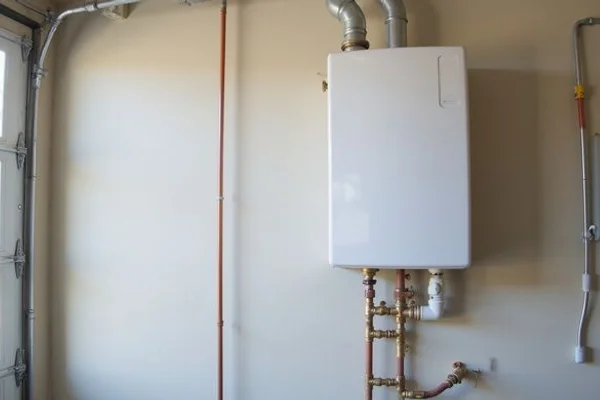
A tankless-to-tankless replacement is actually one of the most budget-friendly plumbing services available. The hardest work is already finished from the original job. You already have several key components in place:
- Your gas line is properly sized.
- The venting path is fully established.
- The wall mounting bracket is secure.
- Those isolation valves make the hardware swap straightforward, provided your last installer fitted them.
Across the US, a typical replacement lands between $3,000 and $5,500. This estimate generally includes your new unit, labor, and local permits.
Compare that figure to the $5,000 to $9,000 price tag for a first-time conversion. The cost savings come into focus immediately.
We are going to walk you through the exact steps used to plan a successful upgrade. You will see exactly how simple this process can be.
When replacement makes sense
A few specific situations push an upgrade project right to the top of your priority list. Recognizing the warning signs early can save you from a cold shower on a winter morning.
Here are the most common triggers for a system swap:
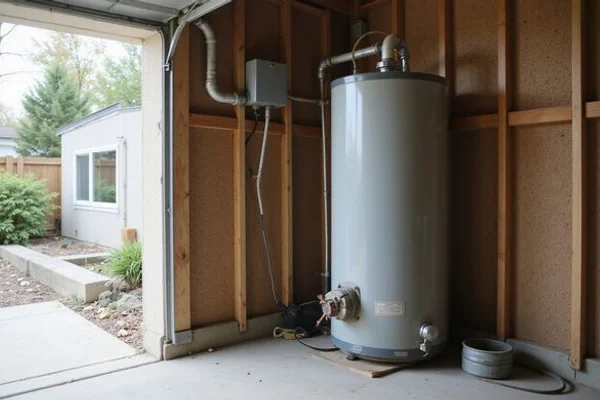
- Your unit is 12 to 15 years old and showing decline. The US Department of Energy notes that a well-maintained tankless system can last 15 to 20 years. Critical internal wear often accelerates around year 12. Longer recovery times, dropped GPM, and frequent error codes, like the Navien E016 heat exchanger warning, are all signs the unit is fatigued.
- The 50% rule trips. If a repair quote runs over half the cost of replacement, the math usually says replace. Sinking $1,500 into a new computer board for a 14-year-old system is simply a bad long-term investment.
- You added a bathroom or grew the household. An 8 GPM unit serving four people is great. Serving six people with simultaneous showers and a dishwasher requires more power. You need to step up to a 9 to 11 GPM unit, like the powerful Navien NPE-240A2, to keep the hot water flowing.
- You want recirculation. NaviCirc or Rinnai Circ-Logic is meaningfully cheaper to add at swap time than as a retrofit. These modern smart-pumps learn your daily routines to deliver hot water exactly when you need it, cutting down on water waste.
Our technicians always check these specific factors during a home visit. This careful evaluation ensures you never replace a system prematurely.
Brand swaps and right-sizing
Switching brands during a replacement is common, straightforward, and fully supported by manufacturers. Moving from an older Rinnai to a new Navien, trading a Navien for a Rheem, or swapping an AO Smith to anything else is easy because the plumbing connections are standardized.
Our team will talk through why you might or might not want to switch brands. The option is completely viable and often leads to better performance.
Right-sizing your new equipment is the most critical step of any replacement. Failing to calculate your actual household demand is the main reason homeowners run out of hot water.
Empire Tankless walks through your real simultaneous-use load to prevent this exact problem. We calculate the draw of a shower, a running dishwasher, and a laundry cycle happening all at once on a busy Saturday morning.
Upgrading from an older 180,000 BTU non-condensing unit to a high-efficiency 199,000 BTU condensing system is sometimes the perfect call. Other times, it is overkill. We will always give you an honest assessment.
To make your decision easier, here is a quick look at how the top 2026 condensing models compare for a standard US home:
| Premium Tankless Model | Max Flow Rate (GPM) | Energy Efficiency (UEF) | Standout Feature |
|---|---|---|---|
| Navien NPE-A2 Series | Up to 11.2 GPM | 0.96 UEF | Built-in ComfortFlow buffer tank |
| Rinnai SENSEI RX | Up to 11.0 GPM | 0.98 UEF | Smart-Circ intelligent learning pump |
| Rheem Ikonic | Up to 11.2 GPM | 0.96 UEF | Built-in Wi-Fi and mobile water tracking |
These high-efficiency models provide incredible energy savings over older units. You will notice a significant drop in your monthly gas bill.
Watch-outs that push price up
Two specific complications can move a standard replacement out of the normal $3,000 to $5,500 range. These factors can quickly push your final bill up toward the higher first-time installation tier.
- Gas line resize. If your existing line is undersized for the new unit’s higher BTU draw, you are looking at $350 to $2,000 of extra gas piping work. This scenario often happens if you upgrade to a modern 199,000 BTU powerhouse. These top-tier models usually require a dedicated 3/4-inch gas line to operate at peak capacity.
- Venting replacement. Old non-condensing venting can sometimes be reused safely. However, switching to a high-efficiency condensing unit changes the exhaust requirements completely. Condensing exhaust is highly acidic, meaning you will need brand-new Schedule 40 PVC or specialized concentric venting installed.
Our specialists carefully flag both of these potential upgrades during the virtual estimate phase. There are absolutely no expensive surprises on your installation day.
Send us a few photos of your current setup for a free virtual estimate.
We will confirm whether reusing your existing parts works safely during your tankless water heater replacement. A dedicated specialist will recommend the best brand for your specific home layout. You will know exactly what your final price looks like before anyone picks up a wrench.