
When to Replace Your Tankless Water Heater
Age benchmarks, cumulative repair-cost thresholds, and performance degradation signs that say your tankless is at end of life — before a hard failure.
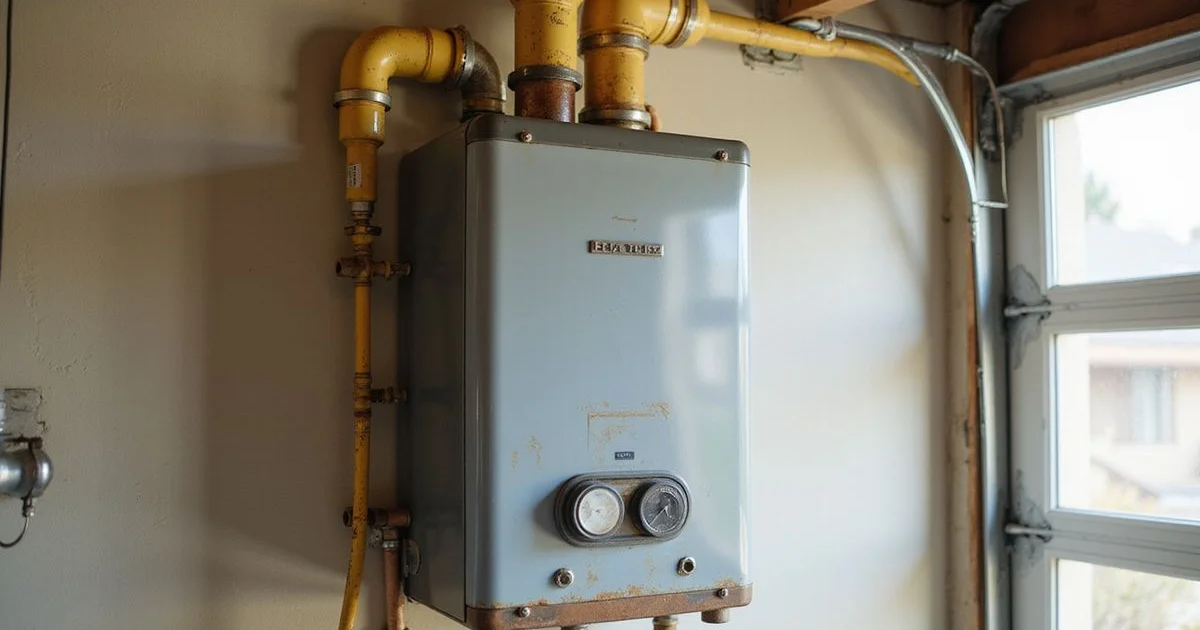
From what we see in the field every week, waiting for a total hardware failure is the most expensive way to manage a property. A complete breakdown never happens at a convenient time.
We often get calls on a holiday weekend about a flooded utility room. Knowing exactly when to replace tankless water heater units saves property owners thousands of dollars and endless headaches.
Our team handles the actual swap through our tankless replacement service, which typically runs $3,000 to $5,500 for US homeowners depending on the setup.
You will find that recognizing the early warning signs gives you total control over the process. Let’s examine the specific data points that signal a necessary upgrade.
The replacement-window question: when to replace tankless water heater
Tankless water heaters do not usually die on a set calendar schedule. They degrade over years of use and eventually fail due to wear and tear. The real question is not if this unit will fail, but exactly when you should replace it.
We look for three specific signals that indicate your replacement window is wide open. These markers include the following:
- The unit passing the 12-year mark
- Cumulative repair costs exceeding a specific financial threshold
- Severe performance drops that descaling cannot fix
Replacing a unit proactively prevents expensive water damage. Our tankless replacement service handles the actual swap, which typically runs $3,000 to $5,500 for local home and business owners. You can save significant money by securing a new unit before the old one floods your property.
Age benchmarks
Age is the most reliable predictor of your tankless lifespan. The Department of Energy estimates a standard operating life of 20 years, but local water conditions drastically alter that timeline.
We see hard water cut unit lifespans by up to five years without strict maintenance. Inland Empire (IE) water contains high levels of calcium carbonate. This mineral content coats the heat exchanger and causes premature failure.
Our technicians use specific age tiers to recommend action. Typical lifespans vary based on conditions and maintenance routines.
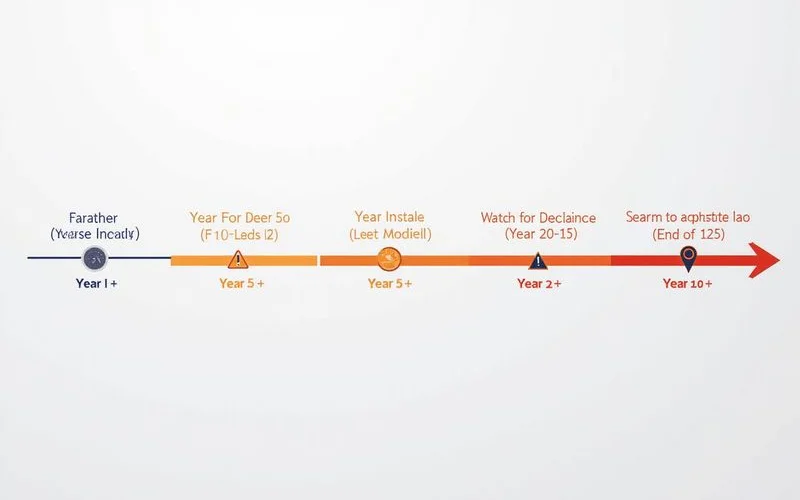
- With annual descaling and soft water: 18 to 22 years
- With annual descaling and hard water (IE): 15 to 18 years
- Skipped maintenance and hard water (IE): 8 to 12 years
Your position on this timeline dictates the best action plan.
| Unit Age | System Status | Recommended Action |
|---|---|---|
| Years 0 to 10 | Normal operation | Focus on basic maintenance and minor repairs. |
| Years 11 to 13 | Watch zone | Monitor performance drops and plan for replacement within 2 to 4 years. |
| Years 14 to 16 | Replacement window | Schedule an upgrade before a major component fails. |
| Years 17+ | End of life | Replace immediately to avoid sudden water damage or emergency fees. |
The cumulative repair threshold
You should replace any tankless unit over ten years old if you have spent more than $1,500 on repairs in the last 24 months. This simple financial threshold prevents you from sinking money into a failing system.
We advise customers to look past the standard 50% rule covered in our repair vs replacement guide. According to 2026 data from Angi, the average tankless repair costs around $600 in the US. Certain components push that repair bill much higher.
If you have spent more than $1,500 on repairs in the last 24 months on a unit past 10 years old, it is time to replace it.
Our crew knows that replacing a cracked heat exchanger often demands $600 to $1,300 in labor costs alone. These cascading failures indicate the unit is slowly shutting down. Repeated $600 repairs on a dying unit only buy you a few uncertain months.
We guarantee that a new installation at $3,000 to $5,500 secures 15 or more years of reliable operation. Upgrading is the clear mathematical choice.
Performance degradation signs
Physical performance drops offer the clearest warning that your old tankless replacement is due soon. You can observe these changes during your daily routines.
We tell clients to watch for several specific behaviors that signal internal hardware fatigue. A single symptom might just require a tune-up. Two or more of these signals stacking together mean the replacement window is fully open.
Extended recovery and flow drops
Longer wait times for hot water mean the unit is struggling to fire. A delay that used to take 30 seconds can easily stretch to over 60 seconds as the burners lose efficiency.
We frequently monitor significant drops in gallons per minute output. This weakened flow becomes obvious during winter when cold groundwater enters the house. The damaged heat exchanger simply cannot handle the required temperature rise to keep up with demand. If your household demand has genuinely outgrown the unit (rather than the unit failing), see our upgrading to a higher GPM tankless guide before deciding on a replacement size.
Frequent error codes and display warnings
Modern units are very vocal about their internal problems. A Navien NPE-A2 uses an EZNav multi-line control panel to broadcast specific faults.
We get concerned when error codes shift from rare events to weekly occurrences. Technicians frequently encounter Navien Error Code E016, which points to a severely overheating heat exchanger. Rinnai models commonly display Code 55 to indicate dangerous scale buildup.
Our staff knows these persistent codes mean the hardware is failing despite your best reset attempts. A reset will not fix a broken sensor.
Stubborn scaling and visible corrosion
Scale damage becomes permanent if left untreated for too long. Annual descaling protects the heat exchanger from new mineral deposits.
We regularly explain that chemical flushes do not repair pitting or cracking on the existing metal. Performance degrades year after year when the primary heat exchanger sustains permanent damage. You will also spot physical wear on the exterior.
Our team looks for rust at the water fittings or severe buildup around the condensate drain. These visual cues show the unit is aging in ways that impact safety.
Warranty status, what is still covered
A warranty check quickly reveals whether a repair makes financial sense. You must understand that most flagship warranties use multiple coverage tiers that expire at different times.
We always verify the manufacturer documents before quoting a major repair. A 12-year-old Rinnai Sensei or Navien NPE-A2 typically retains its 15-year residential heat exchanger coverage. The parts and labor protections on those exact same units expire much earlier.
Most top-tier tankless warranties break down into distinct timeframes:
- Heat exchanger: 12 to 15 years for residential applications.
- Other internal parts: Usually capped at 5 years.
- Professional labor: Typically 1 to 5 years from an authorized installer.
This tiered system creates a false sense of security for older models.
Our team frequently sees approved claims where the manufacturer ships a free replacement heat exchanger. The homeowner still has to pay the $600 to $1,300 out-of-pocket labor rate to have it installed. This steep labor fee often justifies buying a brand new system instead.
We remind property owners to keep documented proof of annual maintenance. Brands will outright deny warranty claims if your service records are missing.
When scale damage is past the descaling point
Scale buildup eventually passes the point of no return. A chemical flush at year eight will not restore a system that spent its first four years scaling unchecked in hard water.
We use commercial descaling agents to remove fresh buildup. These chemicals cannot reverse structural metal damage. Inland Empire hard water is notoriously harsh on copper and stainless steel components.
Our plumbers see calcium carbonate cause severe pitting across the heat exchanger fins. This physical deterioration destroys the unit’s thermal transfer capacity. You can tell the damage is permanent when you notice the following issues:
- Constant error codes despite recent flushes
- Discolored water pointing to internal rust
- A persistent drop in heating speed
Poorly maintained units hit their lifespan cap extremely early.
We never expect 18 years of service from a system that suffered early, unaddressed scale damage. The replacement window for these compromised units opens between 10 and 12 years.
Plan the replacement on your terms
The biggest cost associated with waiting too long is the emergency premium. Scheduling a planned replacement on a Tuesday morning costs significantly less than a weekend disaster response.
We recommend acting early to avoid water damage restoration fees for both home and business owners. A planned swap typically costs $3,500 during normal business hours. That exact same physical labor hits $4,500 or more during a midnight emergency.
| Scenario | Estimated Total Cost | Risk Level |
|---|---|---|
| Planned Weekday Replacement | $3,000 to $3,500 | Low (Controlled environment) |
| Emergency Weekend Swap | $4,500+ | High (Potential flood damage) |
Our representatives can provide a virtual estimate if your unit is past 12 years old and showing signs of decline. You take complete control of the budget by scheduling the work proactively. Schedule the upgrade on a timeline that works for your family.
We know that replacing your unit before it breaks is the smartest financial move. Knowing exactly when to replace tankless water heater systems ensures you never have to deal with cold water. Contact us today to evaluate your current setup.