
Tankless Repair vs Replacement: Making the Call
Aging tankless throwing repeated faults? Age thresholds, the 50% rule, and end-of-life signs that mean replacement beats repair.
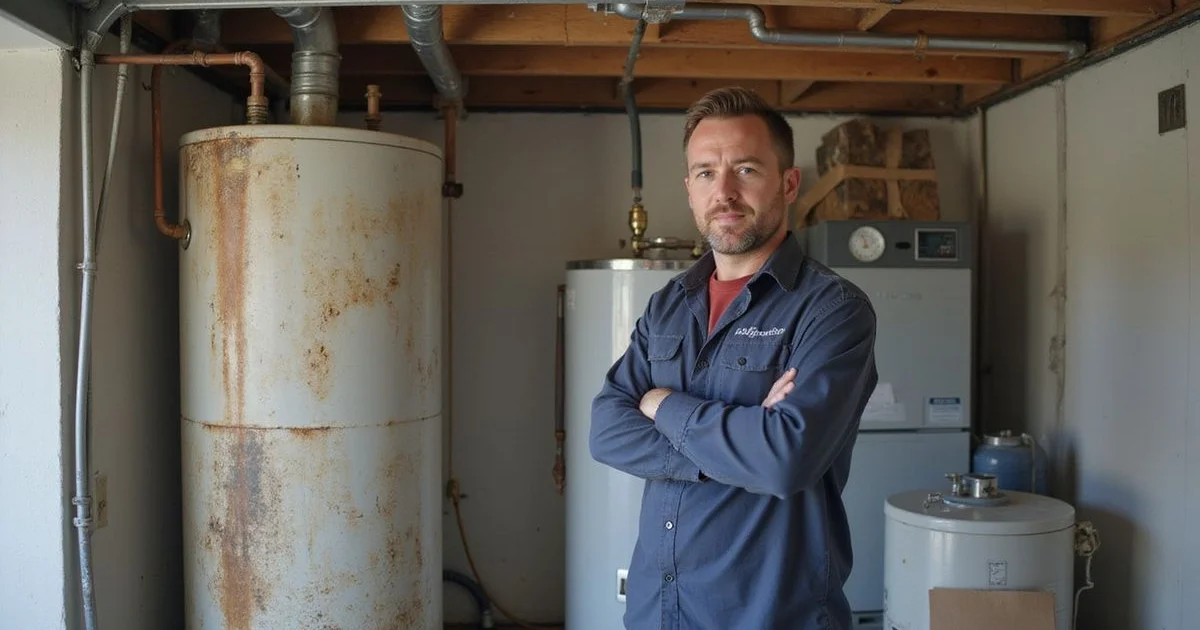
The two-question decision
We regularly see property owners stress over sudden hot water system failures. From what our team has observed, the choice between a quick fix and a total overhaul often feels like a gamble. The reality is that a clear dividing line separates a smart investment from a wasted expense.
Every tankless water heater repair vs replacement decision comes down to two specific factors: unit age and total repair cost. Our tankless repair service provides an honest, side-by-side quote for both options to highlight the most cost-effective path. Let’s explore the current 2026 cost thresholds and the physical warning signs of a failing unit.
Getting accurate answers to these two questions makes the right move completely obvious.
The 50% rule
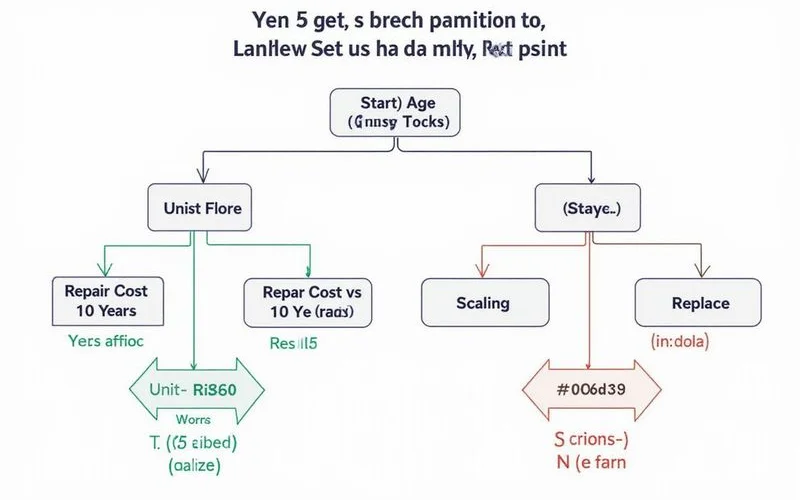
A clean standard borrowed from the HVAC industry makes the math simple. If the proposed repair costs more than 50% of a total replacement, you should replace the unit. Recent 2026 pricing data from Angi shows that a typical tankless installation in the US runs between $3,000 and $6,500. Major repairs like a cracked heat exchanger often reach $1,300 in labor and parts alone. You can quickly see how a single severe failure pushes you past the logical repair threshold.
The 50% rule works because you are purchasing more than just a single part replacement. You are buying the repair, the remaining residual unit value, and the remaining lifespan of the system. Paying a premium to keep an aging unit alive simply does not make financial sense.
We always look at the exact numbers to see where your situation falls on the spectrum. Consider these three common scenarios:
- Repair quote: $1,500. Replacement: $4,500. This creates a 33% ratio, meaning a repair makes complete sense.
- Repair quote: $1,800. Replacement: $4,500. At a 40% ratio, fixing the unit still works but sits right on the borderline.
- Repair quote: $2,500. Replacement: $4,500. A 55% ratio means you are past the threshold, and replacement is the only logical choice.
Our technicians apply two important adjustments to this standard guideline. First, you can stretch to a 60% threshold if the unit is under seven years old. These newer systems still have years of useful life ahead, and warranty coverage for major components usually remains intact. Second, you should drop the acceptable threshold to 35% if the system is over 12 years old. The remaining lifespan is so short that even a moderate $600 control board repair is usually a bad investment.
Age thresholds by lifespan
The typical tankless lifespan reaches 15 to 20 years with consistent annual descaling. If you skip this vital maintenance, the system will likely fail between 8 and 12 years.
Hard water minerals like calcium and magnesium build up inside the system and force the burners to run hotter. This excess heat slowly degrades the internal metal over time. Where your specific unit sits on that age curve dictates the smartest path forward.
We use a specific age timeline to evaluate every system. Major manufacturers like Navien and Rheem typically offer 10 to 15-year warranties on their core components, which heavily influences these recommendations.
| Unit age | Default lean | Exception cases |
|---|---|---|
| 0-5 years | Repair, always | Heat exchanger total failure (rare, check warranty) |
| 6-9 years | Repair if under 50% | Heat exchanger replacement usually equals replace |
| 10-12 years | Repair only if under 40% | Most other major component failures equal replace |
| 13-15 years | Replace most cases | Cheap fix ($200-$400) is acceptable as a temporary bridge |
| 16+ years | Replace, full stop | No exceptions make financial sense |
Our maintenance logs confirm that units serviced annually rarely face catastrophic failures before year 15. You must factor in your past maintenance habits when deciding to repair or replace tankless systems near that 10-year mark.
End-of-life signals beyond age
Sometimes a water system reaches tankless end of life much sooner than the calendar suggests. Certain operational patterns indicate systemic failure regardless of the installation date. You should pay close attention to these warning signs to avoid a complete lack of hot water.
- Multiple component failures within 12 months. Replacing an ignition module last spring, a flow sensor this summer, and now seeing a new error code is not a coincidence. The internal environment of the unit is degrading systemically.
- Irreversible heat exchanger damage. Visible scale damage, micro-cracks in the metal, or persistent over-temperature warnings (like an Error 16 code) indicate a fatal issue. Heat exchanger replacements cost between $800 and $1,500, which almost always triggers the 50% rule.
- Persistent scaling despite maintenance. You might descale the system annually and still notice a massive drop in water pressure. This means the internal copper or stainless steel has permanently degraded and cannot transfer heat efficiently.
- Obsolete replacement parts. Sourcing specific components becomes incredibly difficult if you own an early 2010s non-condensing platform. Every repair takes longer, making an upgrade to a modern 2026 condensing unit the most logical step.
We strongly advise against pouring money into a machine showing multiple symptoms from this list. These compounding issues guarantee that your system will fail again in the near future. If you’re still seeing one-off symptoms rather than multiple compounding failures, our signs your tankless needs repair guide ranks each warning by urgency so you can act early.
What replacement looks like
If the math tips in favor of a completely new installation, the overall financial picture is actually quite favorable. A standard tankless-to-tankless swap typically runs between $3,000 and $5,500 in the US.
This price is meaningfully cheaper than your original installation because the gas line, ventilation, and mounting brackets are already in place. You can review our tankless replacement service to see the exact breakdown of these installation costs.
We always remind clients about current federal incentives that soften the blow of a new purchase. Upgrading to a high-efficiency condensing unit with a 0.95 Uniform Energy Factor (UEF) often qualifies you for the 25C Energy Efficient Home Improvement Tax Credit. This active 2026 federal program can return up to $600 on your taxes, making the upfront investment much easier to manage.
Right-sizing for your property
A replacement project presents the perfect opportunity to fix old annoyances. You get to right-size your equipment based on how you actually use water today.
- Boost your flow rate: If your old 7 Gallons Per Minute (GPM) unit struggled when two showers ran simultaneously, this is the moment to step up to a 9 GPM model.
- Add instant hot water: You can upgrade to a system featuring built-in recirculation technology like NaviCirc or Circ-Logic.
- Improve energy efficiency: Moving from an older non-condensing unit to a modern condensing model significantly drops your monthly gas bill.
We find that most people only evaluate their true hot water needs when they are forced to replace a broken machine. The replacement window is where the most impactful comfort decisions actually get made.
How a virtual estimate clarifies the call
The fastest way to get a definitive answer without paying a $150 residential dispatch fee is to request a virtual estimate. Sending a few specific photos allows a professional to evaluate the system remotely. You can gather the necessary information in about five minutes.
- A clear photo of the existing data plate. This sticker shows the model number, serial number, and installation date, which allows us to instantly verify your warranty status.
- A picture of any active error codes. Capturing the exact digital readout on the display board gives the technician a massive head start on diagnostics.
- A brief description of the failure. Explain exactly what is failing or how the water temperature has degraded over the last few weeks.
- A wide photo of the plumbing and venting. Showing the existing gas line, water connections, and exhaust pipes helps generate a highly accurate replacement quote.
Our team comes back within 24 hours with a comprehensive repair quote, a full replacement quote, and an honest recommendation. If fixing the machine is the right call, the estimate will clearly tell you to keep it. If buying a new one is the smarter financial move, the report outlines exactly why the math supports an upgrade. We never apply high-pressure sales tactics because giving you the wrong advice costs us your long-term business.
When to repair even if it doesn’t fully make sense
A few specific situations argue for repairing the unit even when the strict mathematical formula leans in favor of replacement. Sometimes the technically correct choice conflicts with your current real-world circumstances. You should consider repairing a border-line unit if you fall into one of these three categories.
- You are selling the property soon. A working hot water system at the time of sale holds more immediate value than a complicated story about an unfinished installation. Spending $1,500 on a repair gets the house on the market, letting the new owner handle the eventual upgrade.
- Current cash flow constraints. A $1,500 repair bill is much easier to swallow than a $4,500 replacement quote when funds are tight. Completing a temporary bridge repair buys you enough time to secure financing, tap into home equity, or wait for a tax refund.
- A major remodel is approaching. Planning a kitchen or bathroom expansion next year will completely change your overall hot water demand. Deferring the replacement decision ensures you can buy a properly sized system once the new plumbing fixtures are finalized.
We respect that the best business decision for your property might contradict standard technical advice. Resolving a tankless water heater repair vs replacement dilemma requires balancing immediate costs with long-term value.
Your specific timeline and daily operational needs must dictate the final choice.
Reach out to our team today to request your virtual estimate and get the accurate data you need to move forward.
Frequently Asked Questions
What's the 50% rule?
How old is too old to keep repairing?
Are parts still available for older units?
Related Guides
24/7 Emergency Tankless Water Heater Repair: What to Expect
Tankless emergency at 11pm? Here's what qualifies as a tankless emergency, our after-hours response process, virtual diagnosis, pricing, and what to do before we arrive.
Signs Your Tankless Water Heater Needs Repair
Rising bills, lukewarm water, longer waits, intermittent shutdowns, scale at fixtures — here's what each early warning sign means and how urgent it is.