
Tankless Water Heater Installation Cost in California (2026)
Real California tankless installation prices. First-time conversion: $5K–$9K. Tankless-to-tankless replacement: $3K–$5.5K. What drives the variation and how to read a quote.
The California price reality
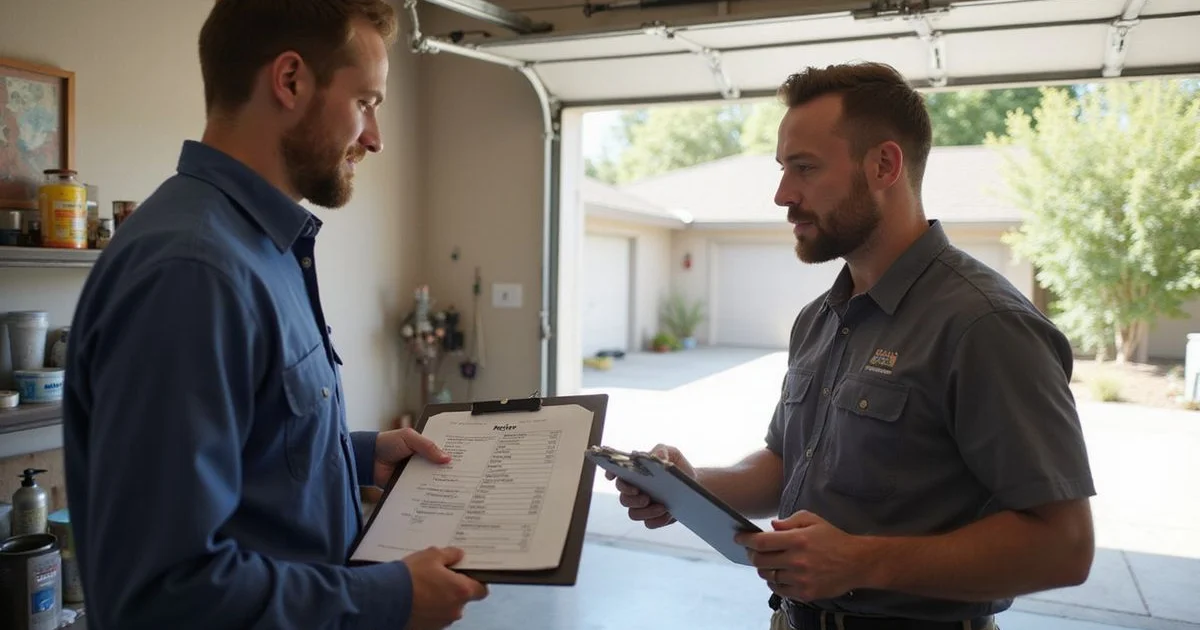
A whole-home gas tankless installation in California currently runs between $5,000 and $9,000, while a tankless-to-tankless replacement costs $3,000 to $5,500. Homeowners often expect lower national averages, but the reality of local codes and labor rates quickly paints a different picture.
We see this disconnect constantly, and setting clear expectations upfront is what separates a smooth project from a frustrating ordeal. That is exactly why our tankless installation service focuses on upfront, itemized pricing.
Let’s look at the actual 2026 data, break down what drives these Inland Empire numbers, and explore practical ways to keep your project on budget.
Three pricing tiers
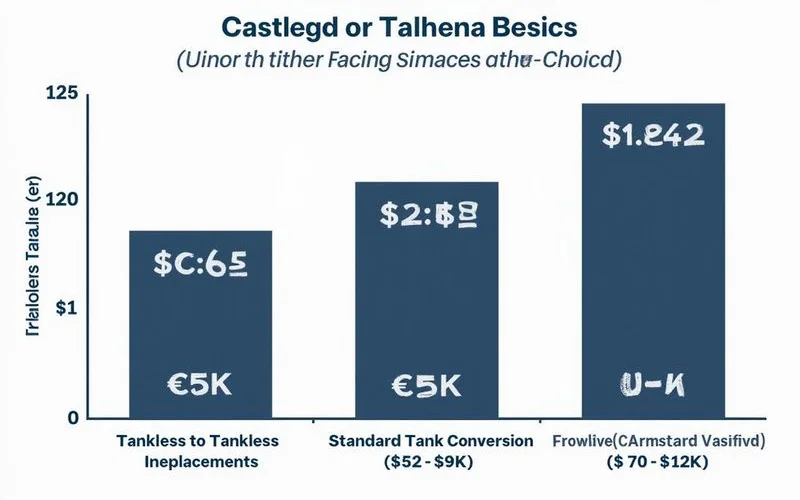
Most California tankless installations fall into one of three distinct pricing categories ranging from $3,000 for a simple swap to over $10,000 for complex relocations. Understanding these tiers helps you budget accurately for your specific home layout.
We regularly review regional data to ensure these estimates reflect the true market rate. Statewide plumbing labor rates average $125 to $200 per hour in 2026, which heavily influences these final numbers.
Here is how most Inland Empire projects sort out:
- Tier 1: Tankless-to-tankless replacement ($3,000 to $5,500). You already have a tankless unit. The gas line is sized correctly, venting is in place, and mounting exists. We swap the old hardware for a new unit, possibly upgrading the brand or gallons per minute. Single-day jobs fall squarely in this category.
- Tier 2: Standard tank-to-tankless conversion ($5,000 to $7,500). You currently have a traditional tank. Your home features accessible gas service, the existing line is adequately sized, and venting can route through an exterior wall without major demolition. Our crews perform this type of conversion more than any other in the Inland Empire. It represents the most common scenario for local homeowners.
- Tier 3: Complex conversion ($7,500 to $10,000+). A project lands here if it requires a major gas-line resize, a long venting run through interior space, or a difficult installation location like a cramped crawlspace. These situations are less common, but they are completely legitimate when the house demands extensive modifications.
What drives variation within each tier
Five main variables dictate your final price. These factors include the specific unit you select, gas line modifications, venting complexity, recirculation features, and local permit fees.
We want you to understand exactly how these choices impact the bottom line. Any of these elements can swing a quote by thousands of dollars.
- Unit selection. A standard non-condensing unit costs less upfront, but a flagship condensing model commands a premium. The compact Rinnai Sensei RX199iN or the Navien NPE-A2 with its built-in ComfortFlow buffer tank represent top-tier options. We always recommend picking the unit that matches your household demand, rather than just grabbing the most expensive model.
- Gas line work. Upgrading from a half-inch to a three-quarter-inch line through finished walls easily adds $1,500 to $2,000 to the total. Older homes frequently require this upgrade to handle the 199,000 BTU demands of modern heaters.
- Venting complexity. Routing PVC exhaust through a short exterior wall is a straightforward process. Running a long interior chase drives up labor and material costs by $600 to $1,200.
- Recirculation. Adding built-in pump systems, such as Navien’s NaviCirc, costs an extra $400 to $900 during installation. This feature provides faster hot water and significantly reduces water waste.
- Permit and inspection. Riverside and San Bernardino counties charge base permit fees ranging from $200 to $400 for a water heater replacement. Our quotes strictly include these mandatory municipal costs so you never face a surprise bill.
Reading a real California quote
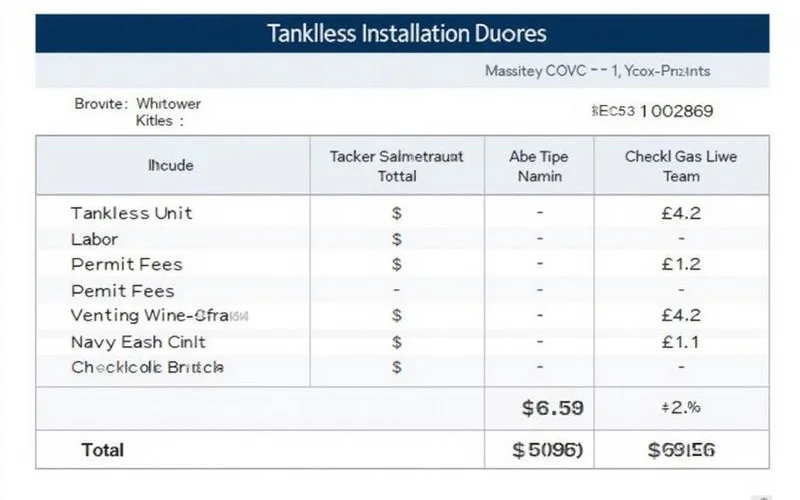
A legitimate quote for a $6,500 Inland Empire conversion will clearly separate materials, labor, permits, and disposal fees. You should demand an itemized breakdown to see exactly where your money is going.
We provide transparent line items on every single estimate. This practice builds trust and eliminates hidden fees.
Here is a typical breakdown for a standard conversion:
| Line item | Amount |
|---|---|
| Tankless unit (Rinnai Sensei RX or Navien NPE-A2) | $1,800 to $2,400 |
| Labor (8 hours plumber + 4 hours apprentice) | $1,800 to $2,400 |
| Permit (Riverside or San Bernardino County) | $250 to $400 |
| PVC venting materials and install | $400 to $700 |
| Gas line check and minor adjustments | $200 to $500 |
| Isolation valve kit (for future descaling) | $150 to $300 |
| Condensate drain (condensing units) | $100 to $200 |
| Disposal of old water heater | Included |
| Total | $5,000 to $7,500 |
If a quote arrives as one lump sum with no details, ask the contractor for clarification. Legitimate professionals are happy to provide the math.
Why CA costs more than the national average
California installations cost 20 to 30 percent more than the national average due to strict energy codes, mandatory permits, and higher prevailing wages. You will often see national tankless installation averages sitting around $3,500 to $5,500, but those numbers simply do not reflect local reality.
Our estimates account for the specific legal and physical requirements of this state. The regional premium comes from four distinct areas:
- Permits and inspections. Most California counties require formal permit pulls and physical inspections to ensure seismic safety and proper venting. Many other states skip this step entirely.
- Title 24 energy code. The 2025 and 2026 Title 24 updates heavily prioritize high Uniform Energy Factor (UEF) ratings. Installers must perform strict load calculations and provide detailed efficiency documentation.
- Labor rates. Licensed plumbers in this region charge between $125 and $200 per hour. Highly trained technicians cost more, and that expense factors into every legitimate bid.
- Insurance and licensing overhead. The state enforces strict contractor licensing and insurance requirements, and that overhead naturally passes through to the service price.
These regulations are not optional. A cheap installation that ignores them creates massive problems down the line.
We have seen unpermitted work lead to failed home sales, voided manufacturer warranties, and severe safety liabilities.
How to spot a bad quote
Quotes under $3,500 for a full conversion are a massive red flag. This suspiciously low price usually means the contractor is skipping permits, lacks insurance, or is using unverified equipment.
Our team strongly advises you to scrutinize any bid that seems too good to be true. Protect your home by watching for these specific warning signs:
- Under $3,500 total. A price this low almost always guarantees missing paperwork, an uninsured installer, or a homeowner-supplied unit that receives no warranty validation.
- No permit included. It is illegal in California to replace a water heater without a permit. If the contractor hides this fee or refuses to pull paperwork, you assume all the risk.
- Vague warranty details. Manufacturers require an authorized professional’s signature and serial number documentation to honor their guarantees. Ask the contractor exactly how they register the product.
- No itemized breakdown. Vague, single-number quotes hide where your money is actually going.
Insider Tip: Always verify your installer’s license status on the Contractors State License Board website. Hiring an unlicensed worker voids most major equipment warranties the moment the unit turns on.
How to lower your effective cost
You can offset installation expenses by applying for local utility rebates and utilizing promotional financing. These two strategies help make a high-efficiency upgrade much more affordable without compromising the quality of the work.
We guide our customers through these financial options every single week. Here are two legitimate ways to bring the final number down:
- SoCalGas rebate. High-efficiency condensing units qualify for substantial cash back. The standard SoCalGas rebate provides $80 to $1,500 for replacing a tank with an Energy Star certified tankless model. Customers rebuilding from specific recent wildfires can even receive up to $2,250. We handle the technical installation documents, so you can easily submit your SoCalGas rebate guide application.
- Financing. Spreading the cost over 24 to 60 months at a zero percent promotional rate makes the budget manageable. This approach does not reduce the total price, but it keeps your monthly cash flow intact. Review our tankless financing guide to explore the typical terms available.
Inland Empire pricing sits squarely in the middle of the California range. It is not the cheapest market in the state, but it is far from the most expensive.
Our free virtual estimate process gives you a precise, localized number specific to your home before any work gets scheduled.
Reach out today to secure your assessment and take the guesswork out of your upgrade.
Frequently Asked Questions
Why is California so much more expensive than national averages?
What's the cheapest legitimate tankless install in CA?
Should I be wary of a sub-$3,500 quote?
Related Guides
SoCalGas Tankless Water Heater Rebates Explained
SoCalGas tankless rebates typically run $600–$1,000. Here's eligibility, application steps, what we handle vs what you submit, and other CA utility programs.
Financing Options for Tankless Water Heater Installation
Financing turns a $5K–$9K tankless install into a manageable monthly payment. Common 0% promo plans, fixed-rate terms, and how to apply through our partner network.
Gas Line and Venting Requirements for Tankless Water Heater Installation
Why tankless needs more gas than a tank, when a gas-line upgrade is required ($350–$2,000), and the difference between PVC and concentric stainless venting.
Is My Home a Good Candidate for Tankless Water Heater Installation?
Find out if your Inland Empire home is right for tankless. Check fuel source, gas capacity, wall access, venting path, and household demand before requesting an estimate.